Long-Term Outcomes of Conservative Management for Pyogenic Myelitis
DOI:
https://doi.org/10.3941/jrcr.5732Abstract
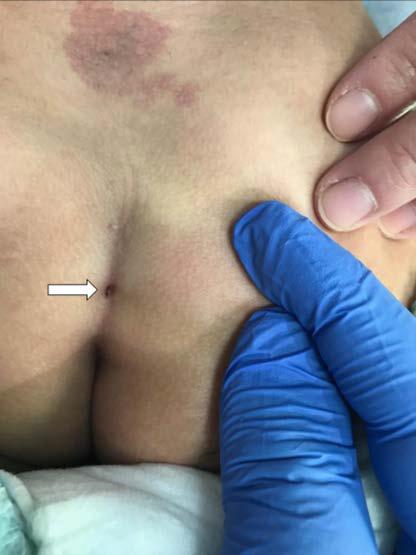
Intramedullary spinal cord abscesses are uncommon, with only a few documented cases. They typically present with lower-limb neurological symptoms and signs of sepsis, often leading to misdiagnosis, particularly in children, where symptoms may be atypical. The present case report details the distinctive presentation of a 4-year-old boy with recurrent urinary tract infections who subsequently developed lower-limb weakness. Initially, his symptoms were attributed to recurrent urinary tract infections, delaying neurological evaluation. However, magnetic resonance imaging revealed a diffuse intramedullary spinal cord abscess extending from the cervical to lumbar regions, linked to an S2–S3 congenital dermal sinus tract. These uncommon congenital dermal sinus tracts promote infections, often leading to overlooked abscess formation in children. Magnetic resonance imaging confirmed whole-spine involvement and follow-up imaging revealed significant resolution with residual fibrotic changes.
Downloads
Published
Issue
Section
License
Copyright (c) 2026 Journal of Radiology Case Reports

This work is licensed under a Creative Commons Attribution-NonCommercial-NoDerivatives 4.0 International License.
The publisher holds the copyright to the published articles and contents. However, the articles in this journal are open-access articles distributed under the terms of the Creative Commons Attribution-NonCommercial-NoDerivs 4.0 License, which permits reproduction and distribution, provided the original work is properly cited. The publisher and author have the right to use the text, images and other multimedia contents from the submitted work for further usage in affiliated programs. Commercial use and derivative works are not permitted, unless explicitly allowed by the publisher.