Ischemic Colitis Secondary to Superior Mesenteric Vein Thrombosis in Hepatocellular Carcinoma: A Case Report
DOI:
https://doi.org/10.3941/jrcr.6058Abstract
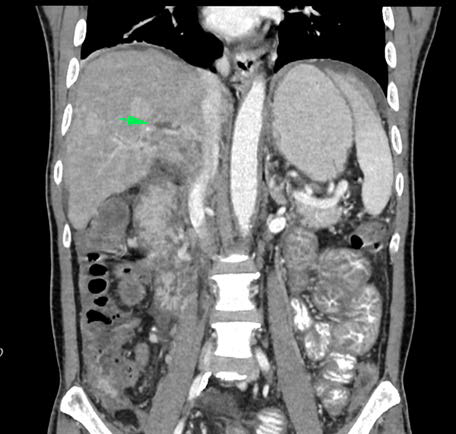
Hepatocellular carcinoma (HCC) most commonly complicates with portal vein thrombosis. However, extension into the superior mesenteric vein (SMV), causing mesenteric venous thrombosis and subsequent ischemic colitis, is a rare and life-threatening sequela that poses a significant diagnostic challenge. A 55-year-old man presented with a two-week history of progressive abdominal pain, distention, and obstipation followed by diarrhea. Initial suspicion was a colonic obstruction. Contrast-enhanced CT revealed an infiltrative HCC with extensive tumor thrombus extending into the portal, splenic, and superior mesenteric veins, causing circumferential bowel wall thickening and fat stranding. Laparotomy confirmed a liver mass and ischemic bowel, with histopathology confirming well-differentiated HCC. The patient was managed with surgical resection and supportive care, with anticoagulation deferred due to high post-operative bleeding risk. This case highlights that HCC can present with features of bowel obstruction secondary to mesenteric veno-occlusion from tumor thrombus. It underscores the critical importance of considering vascular etiologies like SMV thrombosis in patients with known or suspected malignancy who present with acute abdominal symptoms. Early contrast-enhanced CT is essential for correct diagnosis and timely intervention to prevent catastrophic bowel infarction.
Downloads
Published
Issue
Section
License
Copyright (c) 2026 Journal of Radiology Case Reports

This work is licensed under a Creative Commons Attribution-NonCommercial-NoDerivatives 4.0 International License.
The publisher holds the copyright to the published articles and contents. However, the articles in this journal are open-access articles distributed under the terms of the Creative Commons Attribution-NonCommercial-NoDerivs 4.0 License, which permits reproduction and distribution, provided the original work is properly cited. The publisher and author have the right to use the text, images and other multimedia contents from the submitted work for further usage in affiliated programs. Commercial use and derivative works are not permitted, unless explicitly allowed by the publisher.